At no point in human history have we had more access to everything. And at no point have we felt more overstimulated, more distracted, more lonely, and more tired.
We live in an era of excess.
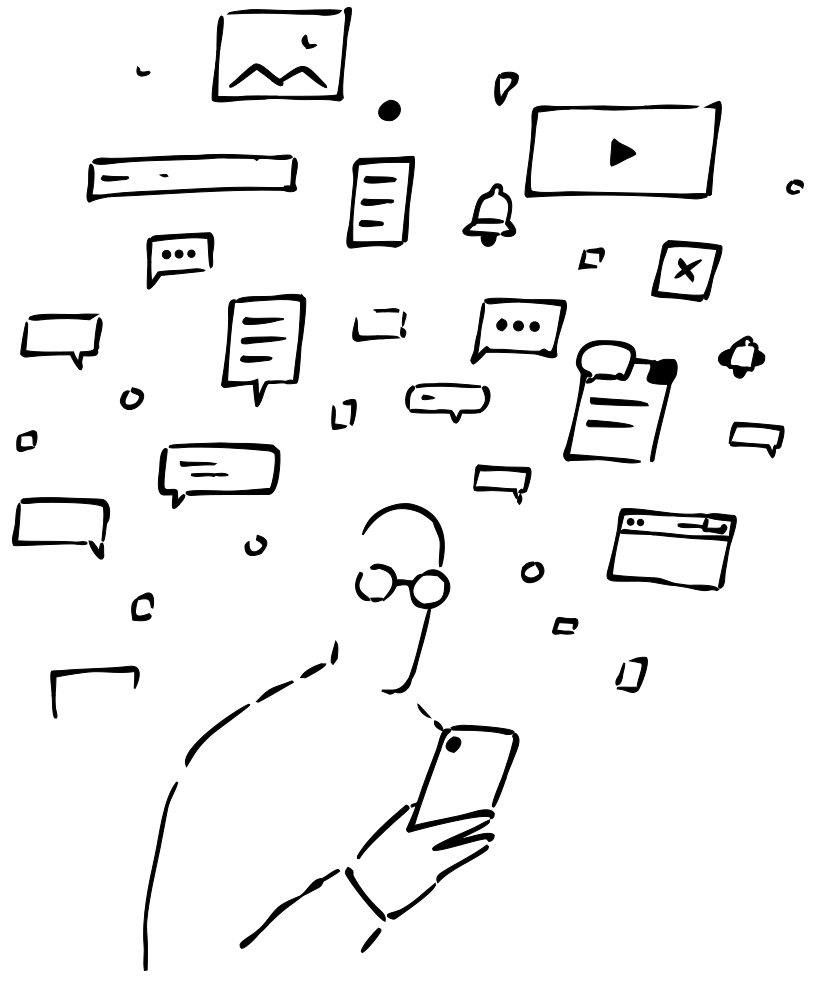
Excess information.
Excess technology.
Excess choice.
Excess connection.
Excess identity.
And yet, somehow, nothing feels like enough.
This is a systemic failure, not a personal one. Note that. We're consuming faster than we can process, and living faster than we can feel.
What a time to be alive
Let's be fair: by almost every measurable standard, this is the greatest time to be alive.
You can learn anything for free, talk to anyone across the planet in real time, build a business from your bedroom, ship your dream app knowing zero code, fly anywhere in hours, and order almost anything to your door before dinner. You can teach yourself coding through AI, produce music without a studio, publish a book without a publisher, and fall in love with someone you've never physically met.
The tools are miraculous. The access is unprecedented. The potential is obviously infinite.
And most of us are drowning in it.
No one taught us how to handle it. We were handed the most powerful era in human history with no manual and no cultural framework for knowing when to stop.
Too much, without the skill to manage it, creates its own kind of poverty.
It's not about rich type shit
We have more than any generation before us. More products, more people, more content, more paths, more versions of who we could become — and the dominant emotional climate of our era is exhaustion.
You over-scroll, over-date, over-compare, over-communicate, over-optimize your entire existence. You consume content you'll never remember, meet people you'll never text again, chase versions of yourself you'll abandon by the next new thing, and collect experiences faster than you can process them.
We treat life like an all-you-can-eat buffet of options, identities, relationships, aesthetics, ambitions — and wonder why we feel bloated and unsatisfied.
We spent two centuries solving material scarcity: food, electricity, transportation. The shift from material scarcity to cognitive overload is one of the biggest psychological changes in human history.
Overconsumption of attention
This is where it starts. Our attention is the most EXPENSIVE thing we own — I will always repeat this. And notice how easily we give it away for free to algorithms that don't know our name. How easily we get manipulated.
We scroll when we're tired, open apps with no intention (just muscle memory) and absorb violent, sexual, bizarre and stupid content we never asked for. It sits in our nervous system like background radiation. You didn't choose it, it chose you.
We talk about information overload like it's a minor inconvenience. It's a slow erosion. Every piece of content consumed without intention costs you something — a thought you didn't have, a moment you didn't feel, a decision you didn't make.
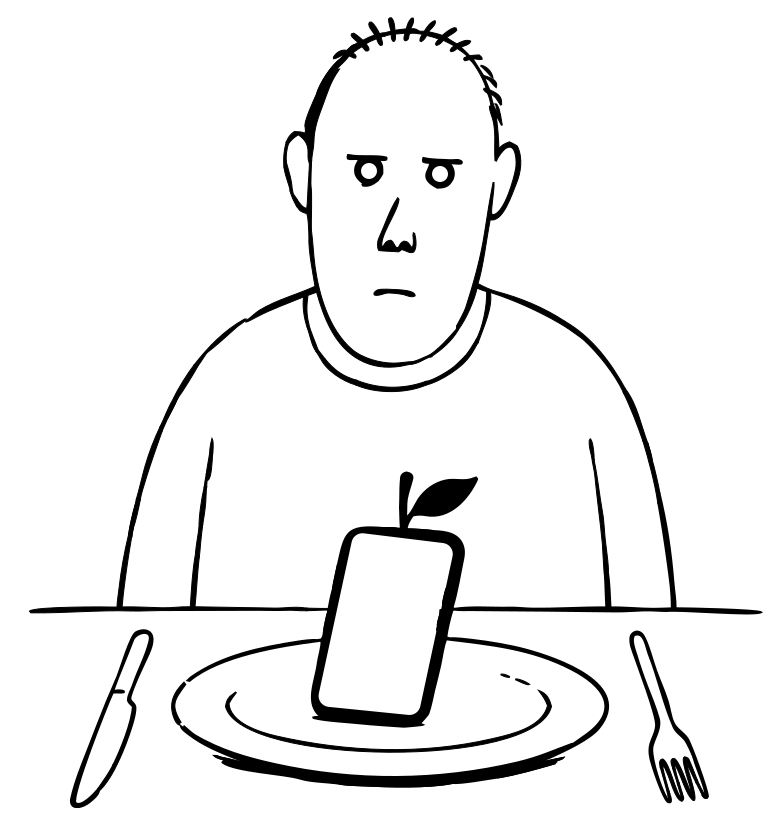
When input exceeds processing, the mind shuts down.
Before mass media — including socials and AI — your brain evolved to handle the social lives of about 150 people (a village). That's Dunbar's number, a cognitive limit backed by thirty years of research across everything from hunter-gatherer tribes to Roman army units.1 Today, your nervous system is processing millions of faces, tragedies, opinions, and lives — every single day. No evolutionary precedent. No manual.
Overconsumption of access
Here is something uniquely 2026: we don't even just buy things anymore. We subscribe to the possibility of using them. Right?
2TB iCloud, ChatGPT, Claude Code, Midjourney etc. You're paying monthly for 12 different versions of a better life and actively using maybe, let's say, 3?
And see, the problem goes deeper than entertainment. We now subscribe to productivity, to creativity, to intelligence itself. You pay for an AI assistant to help you write, think, plan, and organize — then spend three hours scrolling instead of actually using it. Or chatting with it about your crush. Seriously?
You pay for a fitness app that sends you notifs you swipe away. You pay for a language app that guilt-trips you with cartoonish illustrations while you learn literally nothing.
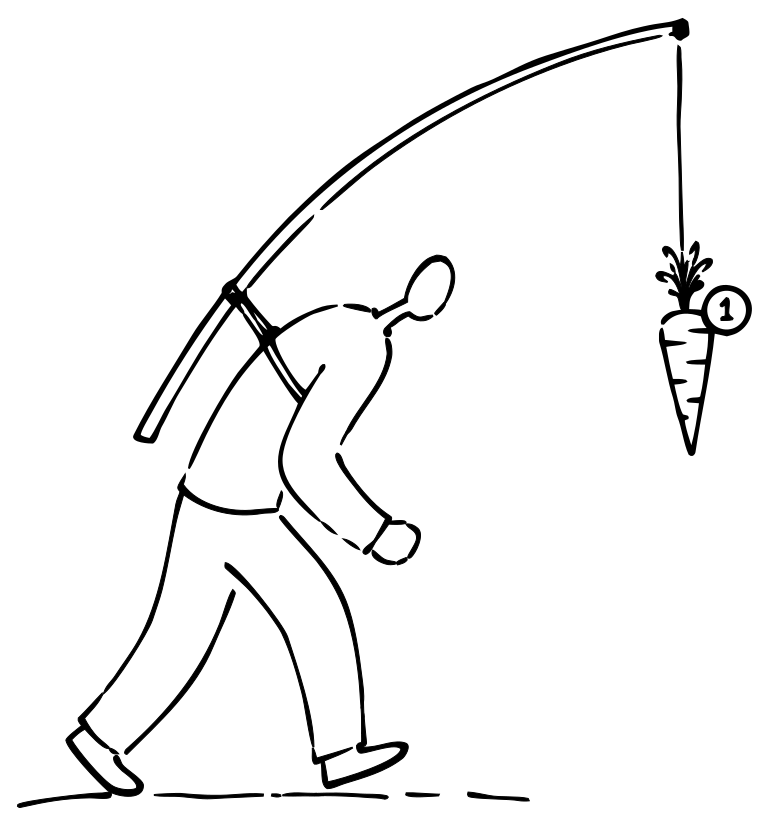
The subscription model sells you access — permanent, low-friction, guilt-free access. And access feels like progress even when nothing is happening.
Signing up feels like doing something. The actual doing becomes optional.
We've built entire lives around infrastructure we never use. We keep paying because canceling feels like giving up on the version of ourselves who subscribed in the first place.
Overconsumption of people and relationships
This is the part nobody wants to hear: we overconsume people, and not even just romantically.
We cycle through, as we think, unlimited first dates, collect surface-level friendships, and maintain professional connections that exist only in socials. We stay half-in, half-out of everything, calling it flexibility when it's really just fear of choosing.
Ghosting is overflow. When you have too many options, no one feels irreplaceable — and when no one feels irreplaceable, no one gets fully chosen.
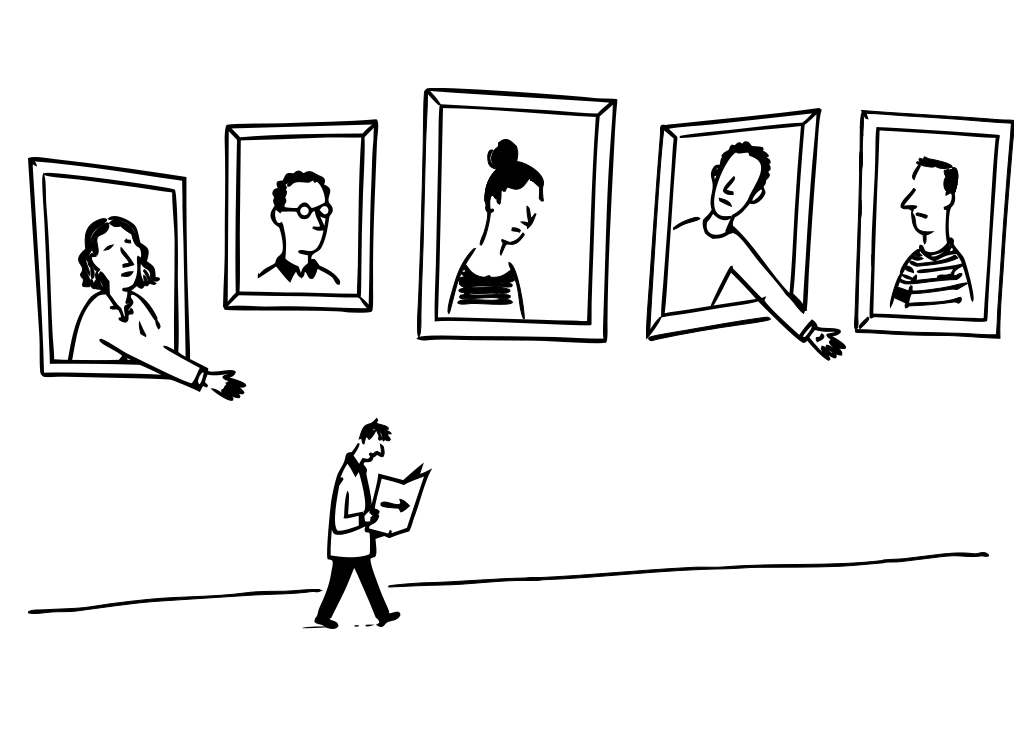
When everything is optional, nothing becomes sacred.
In the long run, this rewires how we attach. Please pay attention. Rewires. You stop building with people and start browsing through them. I've done it too. Kept people at arm's length and called it protecting my peace. Loyalty starts to feel inefficient.
The muscle responsible for staying — through boredom, through conflict, through the uncomfortable middle of any relationship — atrophies. And one day you realize you have hundreds of contacts and no one to call, because you never let anyone stay long enough to matter.
Overconsumption of self-image
This is the quiet one — the kind that drains you without leaving a receipt.
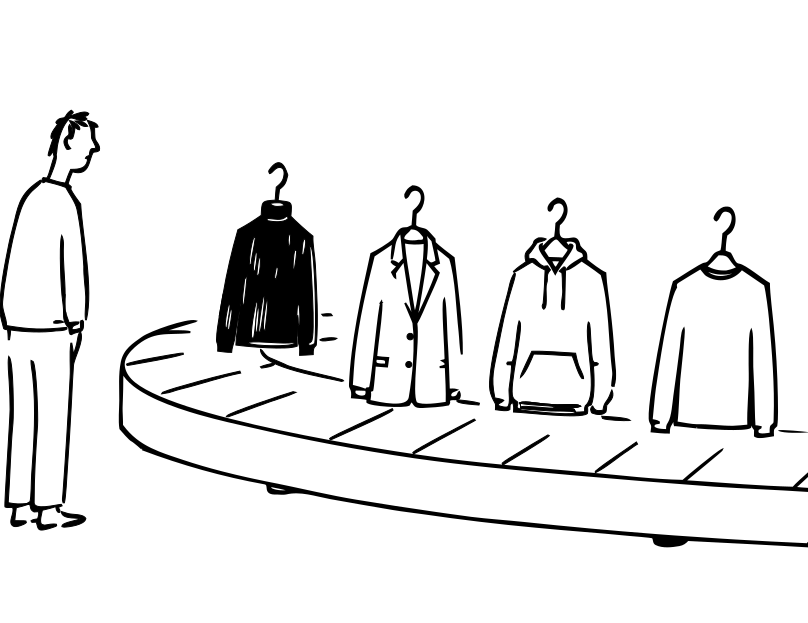
Every purchase is a costume — a version of yourself that expires with the next trend cycle. You change aesthetics more often than you change your mind about anything that actually matters.
You know, there's something genuinely powerful about being recognized for the same type of outfits, because it means you've stopped performing and started simply existing. But that kind of stillness is terrifying in a culture that packages reinvention as self-care.
We overconsume identities, and each new version puts a little more distance between us and whoever we actually are.
The emotional cost
Overconsumption makes life louder.
You're tired from noise — from people you didn't need, content you didn't choose, and things that, on any honest day, don't matter to you at all. This is the burnout nobody diagnoses, because it comes from absorbing too much, from living in a constant state of input without ever producing a clear internal signal.
Numbness isn't the absence of feeling. Numbness is the presence of everything at once.
In the 1940s Adorno and Horkheimer warned that culture would stop being something you experience and become something you consume.2 They were talking about radio and film. They couldn't have imagined a world where creativity, productivity, intelligence, and even identity would be mass-produced and sold back to you on a monthly plan. They called it the culture industry. Eighty years later, we live inside it.
Digital minimalism
Forget the "I deleted socials" fake flex that usually lasts no more than a week. Been there.
Real minimalism is an actual mindful no-force choice. It's deleting the app that makes you impulse-buy at 2AM, unfollowing accounts that make you feel perpetually behind, and recognizing that the video you just watched for an hour or two wasn't entertainment — it was anesthesia.
You don't need a digital detox. You need a strict digital diet, one that doesn't eliminate everything but simply requires you to choose what gets in.
Minimalism means stopping the involuntary consumption of more.
Selective living
The antidote to overconsumption is selection.
It means fewer dates but deeper ones, fewer clothes but better ones, fewer opinions absorbed and more thoughts actually formed, fewer tabs open in your browser and in your life.
Selective living is not 'cool' by design — no one posts about it, there's no haul video for "I didn't buy anything this week," and there's certainly no content trend for "I sat with one idea for a month."
But the people who live this way tend to share something in common: they're not anxious, they're not scattered, and they know what they want — because they gave themselves enough silence to hear it. Which is luxury these days.
From never enough to enough
Overconsumption is a sign that we've lost the ability to stop.
We keep adding — apps, people, goals, identities, inputs — hoping the next addition will be the one that finally feels like enough. Enough is something you recognize by subtraction.
Maybe the most radical act in 2026 is genuinely wanting less.
For a long time, I was taking in everything. Content, people, identities, subscriptions, ambitions, noise — all of it, all at once. I called it living a full life, "trying it all". It was volume. The moment I started cutting things away — deliberately, uncomfortably, one at a time — I braced myself to feel empty. What I got was silence. And in that silence, for the first time in years, I could actually hear myself.
No noise, no jealousy, no bs. You can get there too. Not by overhauling your life overnight, but by starting with five minutes of honesty.
Where to start
You don't need a 30-day challenge. Here's what you might want to do — feel free to choose your own framework:
- Screen check before bed. Tonight, before you put your phone down, look at your screen time. Just look. Most people are genuinely shocked. That 8-hour average didn't come from intention. It came from autopilot.
- One app delete, right now. Not the one you love, the one you open out of boredom and close feeling worse. You know which one it is. You probably opened it twice while reading this. For me it was Instagram. I'm Instagram-free for a long while now.
- Wear the same two outfits for a week. Pick outfits you like and feel like yourself in, and repeat them. Watch how nobody notices and how much mental space you get back when you stop performing for the mirror. If you catch me in person, you'll see me wearing the same things. I still look clean, sharp, and gorgeous (yep). But I value my time now.
- Go somewhere without documenting it. No story, no photo, no check-in. Just go and let it exist only in your memory. I started doing this and realized half my experiences were happening for the camera, not for me.
- Wait 72 hours before buying anything from a short-vid. If you still want it, go ahead. But most of the time you won't even remember what it was. That's how real the need was. I've saved more money from this habit than from any budgeting app I subscribed to and never opened.
- Audit your subscriptions. Open your bank statement, count every recurring charge, and ask one question per line: did I use this in the last 30 days? Not "could I use it", did I? Cancel everything that survived on good intentions alone. You'll be surprised how much money was going toward a person you never became.
- Write down the five people you gave the most energy to this month. Not the five you love most, the five who actually got your time. If those lists don't match, that's your answer.
- Sit somewhere for ten minutes with absolutely nothing. No phone, no book, no music. Just you and whatever thoughts show up. It will feel unbearable at first. That discomfort is the exact measure of how overstimulated you've become.
Pay attention how free you will feel. How much time you will have for things that matter. None of this is revolutionary. That's the whole point. The shift doesn't start with a grand gesture. It starts with the small, uncomfortable moment where you choose less — and realize you're not missing anything.